Create a Wallet
Understand what is created, what must be backed up, and which credentials should remain offline.
Open guide →
imtoken · Multi-chain Wallet & Web3 Knowledge Hub
A multi-chain wallet, blockchain network and Web3 knowledge hub from imtoken
Manage multi-chain assets with a clearer view of network selection, sending and receiving, DApp connections, approvals, network concepts and wallet security. Each action is designed around reviewable information rather than hidden assumptions.
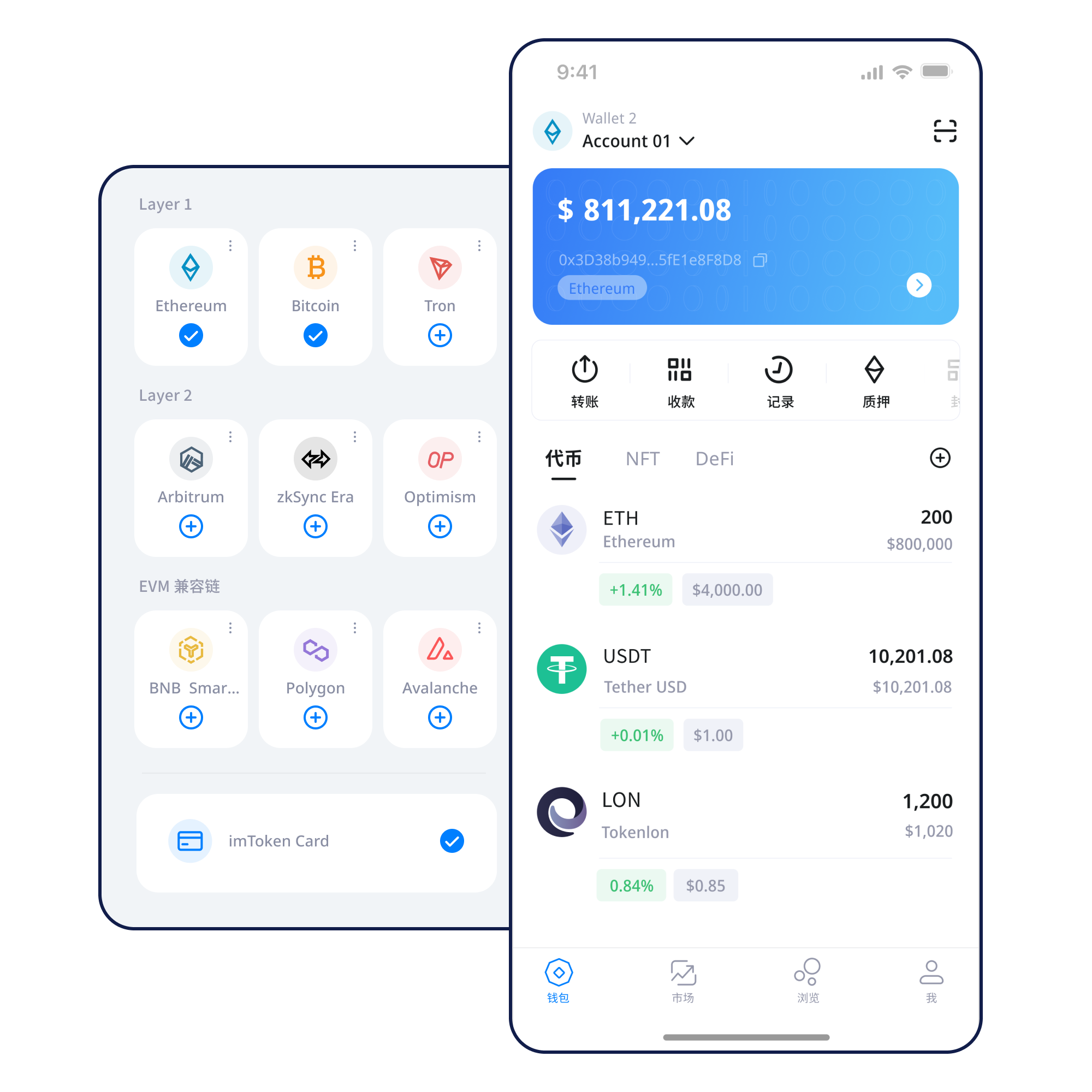
Common tasks
Understand what is created, what must be backed up, and which credentials should remain offline.
Open guide →Record the seed phrase offline and verify that your backup is readable before relying on it.
Open guide →Share the correct receiving address only after confirming the network used by the sender.
Open guide →Check the destination, network, amount, gas and transaction summary before signing.
Open guide →Verify the domain, account request, signature and approval scope one request at a time.
Open guide →Wallet capabilities
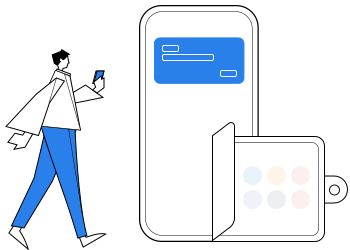
Separate asset identity from network identity. Similar symbols can exist on different chains, while confirmations and fees follow the rules of the selected network.
Review the receiving address, network, amount, gas and transaction hash as one connected sequence.
Transfer guide →A mobile view for networks, assets, records and DApp activity.
Browser connections should remain explicit: review accounts, signatures, approvals and disconnect sessions you no longer use.
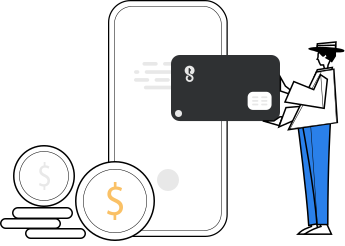
Keep seed phrases and private keys offline, and review approvals as permissions rather than routine clicks.
Network explorer
A wallet can present several networks in one interface, but each network keeps its own state, fees and confirmation process. Verify where an asset actually exists before transferring it.
Nodes propagate and validate information, blocks organize transactions, and explorers help users inspect public on-chain records.
EVM-compatible networks often share similar account and contract models, but chain IDs, gas assets and bridge paths still differ.
Layer 2 changes where execution and data handling occur while retaining a relationship with a base network. Bridge and exit mechanics should be reviewed before moving assets.
Fees and confirmation timing depend on network rules and current demand. A transaction hash lets you inspect what the network recorded after submission.
Wallet path
Use the official download entry and keep the device environment under your control.
Understand whether you are creating new keys or restoring control from an existing backup.
Store the seed phrase offline and never send a private key to another person.
Match the asset and destination network before you prepare a transfer.
Verify the address, amount, network and gas before signing.
Keep transaction hashes and periodically remove permissions you no longer need.
Web3 & DApp
A wallet connection is only the beginning of a session. Verify the domain, inspect the requested account, read every signature or approval, and disconnect sessions you no longer need.
Web3 guide →Security center
Seed phrases and private keys remain under the user’s control and should be kept offline. Official staff should never request them. Before a transfer, verify the address, network and amount; before a DApp action, inspect the domain, signature text and approval scope. Public computers, public networks, remote-control tools and unexpected clipboard changes can introduce additional risk. A wallet cannot guarantee that a third-party contract is safe, and it cannot unilaterally reverse a confirmed on-chain transaction, so the best protection is a consistent verification routine before every important action.
Open security center →Academy feature
A useful starting point is to separate the wallet from the blockchain itself. Learn what an address identifies, why a seed phrase controls recovery, how private keys authorize actions, why networks and gas matter, what a transaction hash proves, and how DApps and token approvals add permission decisions.
Read the beginner guide →How nodes, blocks and explorers turn submitted transactions into public records.
Accounts, gas, contracts, token calls and approval boundaries.
How Layer 2 relates to a base network and why bridge paths matter.
Read targets, allowance scope and long-lived permissions before approval.
Build habits for keys, devices, signatures, phishing and transfer checks.
Use concise definitions to connect wallet terms with network behavior.
Ethereum · PoS
Ethereum PoS uses validators to participate in consensus. Reward sources, validator status, withdrawals, exits and waiting periods follow network rules and can change over time.
Learn staking basics →Updates
Wallet actions now have clearer paths to network, transaction and approval learning content.
Review chain identity and gas asset before moving funds between networks.
No legitimate support process needs your seed phrase, private key or verification code.
Staking and validator information is educational and does not promise fixed returns.
FAQ
The network records asset state; the wallet manages keys and helps you interact with that state.
No. Do not send seed phrases, private keys or verification codes to anyone.
Assets with similar names can exist on different networks, and fees or confirmations follow the selected chain.
It is an identifier used to inspect a submitted transaction on a block explorer.
No. Signatures, transactions and token approvals remain separate decisions.
No. Rewards can change and participation involves network, validator, contract and market risk.
imtoken
Keep control of your keys, verify the network, and review every signature and approval.